Designing Playfulness:
A 15-piece Expansion for Fatboy
Assigned during the third semester of the Development & Management course at AMFI, the Fatboy capsule collection challenged us to translate a non-fashion brand’s DNA into a fashion context. Our team acted as a creative consultancy, investigating how Fatboy, a lifestyle brand best known for its oversized beanbags and playful tone could enter the fashion market without alienating its core audience.
The first part of the project involved deep brand research. We analysed Fatboy’s identity, customer perception, and product universe. With a strong emphasis on humour, comfort, and functionality, Fatboy felt more like a character than a company. Its postmodern spirit and bold product styling gave us a strong aesthetic starting point. But customer feedback revealed a disconnect: while Fatboy claimed to produce “made to last” products, many reviews expressed disappointment with durability. This insight led us to a hybrid concept. Merging workwear’s functionality with Fatboy’s exaggerated, ironic design language.
Our creative direction embraced the humour, oversized proportions, and unconventional shapes found in Fatboy's signature pieces. We embedded these qualities into garments through exaggerated silhouettes, chunky zippers, and even referencing the brand's famous bean bag fabric. But we balanced these playful elements with technical materials and construction details drawn from utilitarian clothing. The result was a postmodern workwear capsule that could exist across urban and home environments.
The final capsule consisted of 15 garments and one tote bag, all designed to reflect both the visual DNA and functional aspirations of Fatboy. From oversized padded jackets to modular layering systems and wide-cut pants, every piece offered comfort without compromising visual identity. Though the silhouettes were playful, the garments were engineered with purpose.
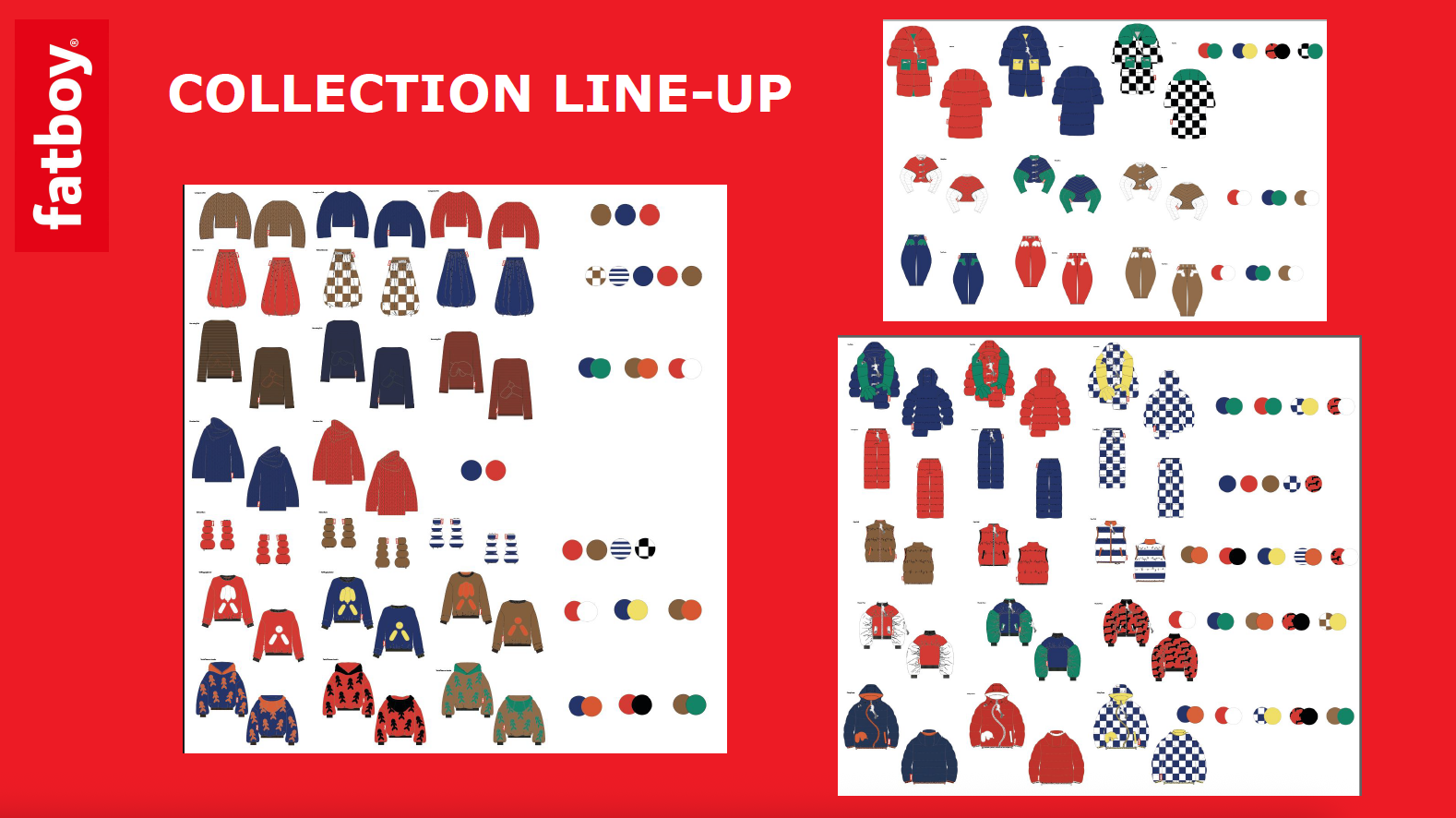
(Collection line-up featuring all 15 items as technical drawings.)
Beyond design, we translated the concept into a commercial framework. We built a rangeplan outlining price architecture, colour logic, and product hierarchy. Key considerations included top-to-bottom ratio, price accessibility, and consistency with Fatboy’s current positioning. While not as detailed as a full buying file, the rangeplan grounded the concept in feasibility and market logic.
This project was particularly valuable in understanding how research can drive collection development at scale. Moving from brand analysis to a cohesive 15-piece range required a clear, consistent strategy and a deep understanding of brand storytelling. It sharpened my ability to translate abstract identity into tangible form.

(Concept board for the collection)
The Fatboy project reflects several of my core service areas as a future buying and brand development professional: Trend & Market Research, Brand Development Concepts, and Range Planning & Product Segmentation. It showed me how critical it is to align product with story, and how playful design doesn’t mean compromising on function.