Why are fashion brands
opening cafés?
I’ve always loved experimenting with matcha, especially when I can find a café that offers something new: a unique glass, a twist of flavor, an aesthetic detail that feels intentional. This personal curiosity quickly turned into a broader fascination when I started noticing a pattern. Fashion brands weren’t just selling clothes anymore, they were selling experiences, and those experiences increasingly included coffee, cake, and curated playlists. From Prada’s Prada Caffè in Harrods to Maison Margiela’s dreamy concept space in Chengdu, the integration of cafés and restaurants into retail wasn’t just a coincidence. It was strategy. I wanted to explore why luxury fashion brands are turning to food service as part of their identity and what it says about the future of fashion itself.
Fashion has always been about seduction. But in a time where luxury is less about product and more about atmosphere, brands are reimagining how seduction works. It’s no longer enough to sell a handbag; you need to sell a feeling. A space. A moment. Branded cafés serve this new mandate by extending the brand’s visual and emotional language into an immersive, often edible, form. Walking into a Gucci Osteria or Jacquemus’s Café Fleurs isn’t just about grabbing a bite, it’s about entering the world of the brand. The latte art, the wallpaper, the staff uniforms: all of it is curated to maintain the fantasy.
This isn’t just about aesthetics, it’s about behavior. According to Forbes and Fast Company, the café model increases dwell time and foot traffic, encouraging customers to linger, post, and share. It also lowers the barrier of entry. Not everyone can afford a Dior dress, but a Dior-branded croissant? That’s accessible luxury. The coffee cup becomes a status object, a symbol of participation in the brand universe. In a post-pandemic world where traditional retail is struggling to remain relevant, cafés offer something tactile, sensorial, and photographable. They turn passive browsing into active engagement.
There’s also a cultural shift at play. Today’s consumers, especially younger demographics, want brands to offer more than a product. They want storytelling, lifestyle alignment, and social capital. The café becomes a hybrid space part showroom, part stage, part community hub. It’s a place where digital aesthetics are made real. The Maison Margiela café in Chengdu, for instance, transforms the brand’s deconstructed design philosophy into a spatial and culinary experience: fragmented mirrors, layered textures, avant-garde desserts. The food doesn’t just nourish, it performs.
Balenciaga’s café in Tokyo is another example of immersive branding. With brutalist interiors and a minimalist drink menu, it reflects the house’s commitment to stark, disruptive aesthetics. The space becomes a mirror of the brand’s identity: cold, ironic, hyper-stylized. Meanwhile, Jacquemus's café in Paris bursts with Mediterranean warmth and floral exuberance, echoing the designer’s playful romanticism. These contrasting examples highlight the elasticity of the concept. No two fashion cafés look or feel the same, because they are tailored to each brand’s narrative.
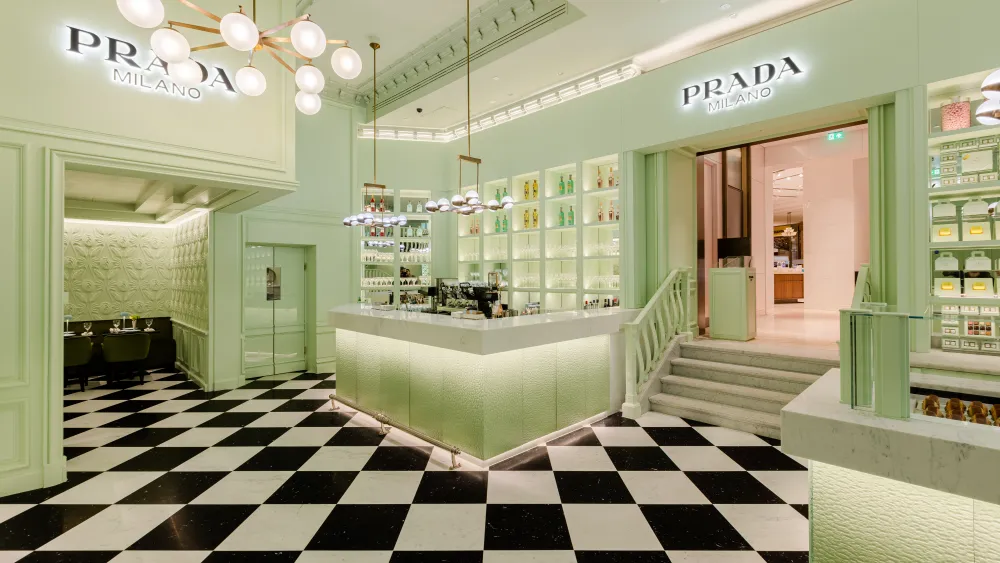
(Prada Cafe located in Harrods, London.)
But beyond performance, there’s something more subtle happening: brands are learning to listen. Cafés invite intimacy. They’re slower, more conversational, more observational than a typical fashion store. In many ways, they become feedback loops. What are customers wearing? Photographing? Ordering? Which table gets tagged most on Instagram? These micro-interactions generate valuable insight. It’s ethnographic research disguised as hospitality.
Branded cafés are also a clever way to localize a global brand. By adapting menus, ingredients, and aesthetics to regional tastes, fashion houses can engage in cultural dialogue while still maintaining brand consistency. Prada’s café in Harrods offers British pastries in Italian packaging. Dior’s Café in Seoul offers matcha panna cotta. These gestures show respect for local identity while reinforcing brand cosmopolitanism. In this sense, cafés function as cultural diplomats.
Another layer worth considering is time. Fashion operates on cycles, seasons, shows and drops while cafés offer constancy. They become semi-permanent installations, more enduring than a window display, more engaging than a pop-up. This temporal contrast stabilizes the brand’s presence in a city, creating a landmark effect. In places like Milan, Tokyo, or Seoul, a fashion café becomes a destination not just for fans of the brand, but for travelers, locals, and lifestyle tourists. It positions the brand within urban culture.
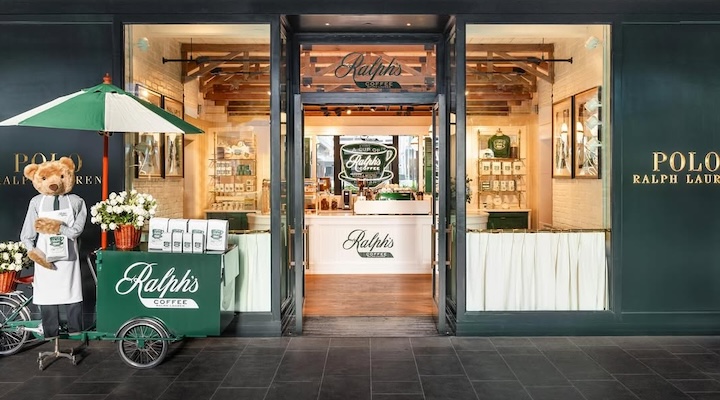
(Ralph Lauren was one of the first major fashion brands to start its own cafe.)
In addition to permanence, these cafés offer brands a way to test cross-category relevance. Food and beverage are sensory-rich categories, and venturing into them challenges brands to maintain consistency while expanding their vocabulary. What does a Loewe latte taste like? What kind of croissant fits the Bottega aesthetic? These questions require internal clarity about brand values. The answers become part of the brand book.
Of course, the risk is that the café becomes gimmick rather than genuine extension. When done poorly, it can feel like brand cosplay. But when done with care, these spaces can deepen a brand’s value proposition. They signal a commitment to experience, to lifestyle, to community. They suggest that the brand isn’t just something you wear, it’s something you live inside of.
This research opened my eyes to how retail spaces are evolving, not as transactional sites but as environments for cultural storytelling. As someone studying Fashion & Management at AMFI, with a particular interest in buying, brand systems, and identity-driven strategy, I found this topic incredibly relevant. It reminded me that product assortment is just one part of the equation. Context matters. Ambience matters. The emotional resonance of a brand space can be as impactful as the collection itself.
In my future role. Whether as a buyer, concept strategist, or brand developer. I want to champion brands that understand this shift. That see value not just in what they sell, but how they make people feel. I want to curate environments, partnerships, and narratives that blur the lines between commerce and culture. Fashion cafés, when done right, are not distractions from the product. They are extensions of the brand soul. And for me, that’s where the future of fashion is heading: toward meaning, toward experience, toward moments that last longer than a trend. Toward places that leave a taste, a memory, a story you bring home. Not just in a shopping bag, but on your phone, your feed, and your palate.