Manga and punk fashion: Ai Yazawa’s
ode to Vivienne Westwood
I chose to explore the connection between Ai Yazawa and Vivienne Westwood because I’ve always been drawn to the intersection of visual culture, identity, and storytelling. As someone studying fashion management with a focus on buying and brand development, I wanted to better understand how clothing can carry meaning far beyond trend or product. This research allowed me to examine how fashion operates as a language, how it communicates emotion, history, and ideology through visual codes. By looking at how Yazawa embeds Westwood’s punk legacy into Nana, I was able to reflect on my own role as a future fashion professional: someone who curates not just product, but purpose.
Ai Yazawa’s Nana is more than just a punk-inspired manga; it’s a delicate balancing act between outward rebellion and inward vulnerability. While the series is visually coded in punk, piercings, plaid, leather, chains. The core of Nana lies in its emotional sincerity. Nana Osaki, the protagonist, is not rebelling for rebellion’s sake; her visual aggression is both a shield and a language. She dresses like a punk, but she feels like a poet. This juxtaposition creates a new kind of character: someone who appears untouchable yet constantly bleeds through the pages. Punk, in Yazawa’s world, isn’t about chaos, it’s about surviving fragility.
Vivienne Westwood’s punk was similarly paradoxical. Though rooted in political provocation and anti-establishment rage, her work always retained a performative, almost romantic flair. The mix of historical references, eroticism, and irony made her garments into walking contradictions. Yazawa picks up this contradiction and transforms it into narrative structure. Nana’s story isn’t linear rebellion, it’s cyclical. She pushes, withdraws, doubts, lashes out, and dreams. This complex duality challenges our assumptions. Can punk be tender? Can a character be both tough and devastated? Nana Osaki answers with a yes, not in words, but in eyeliner-stained glances, in lyrics, in fashion that clings to her like a second skin.
In most manga, fashion is a stylistic afterthought. In Nana, it becomes the script. Clothes in Yazawa’s world do not simply decorate characters, they construct them. Nana Osaki wears Westwood not to look cool, but because it aligns with who she believes she is, or perhaps, who she wants to become. This aspirational tension is key. When she wears a “Let It Rock” t-shirt, it’s not a vintage nod, it’s an act of identity-making. Yazawa’s precision in replicating actual Westwood garments, rocking horse shoes, orb necklaces, bondage trousers is striking. These aren’t vague homages; they’re deliberate citations. Fashion becomes intertextual. Westwood’s archive, translated into manga panels, adds layers of meaning. For those who recognize the references, the fashion choices carry weight: they tell us about class, resistance, gender performance. For those unfamiliar, the emotion still comes through. That’s the power of fashion when treated as language.
Each garment in Nana holds narrative function. Hachi’s soft, girly looks reflect her desire to be loved and accepted. Nana Osaki’s sharp lines and harsh silhouettes mirror her fear of intimacy and her obsession with self-definition. The reader learns to read clothing as character development. It’s not exposition, it’s expression. In this sense, Yazawa does what few fashion magazines even attempt: she makes clothes matter narratively. Westwood becomes more than a brand; she becomes a co-author.
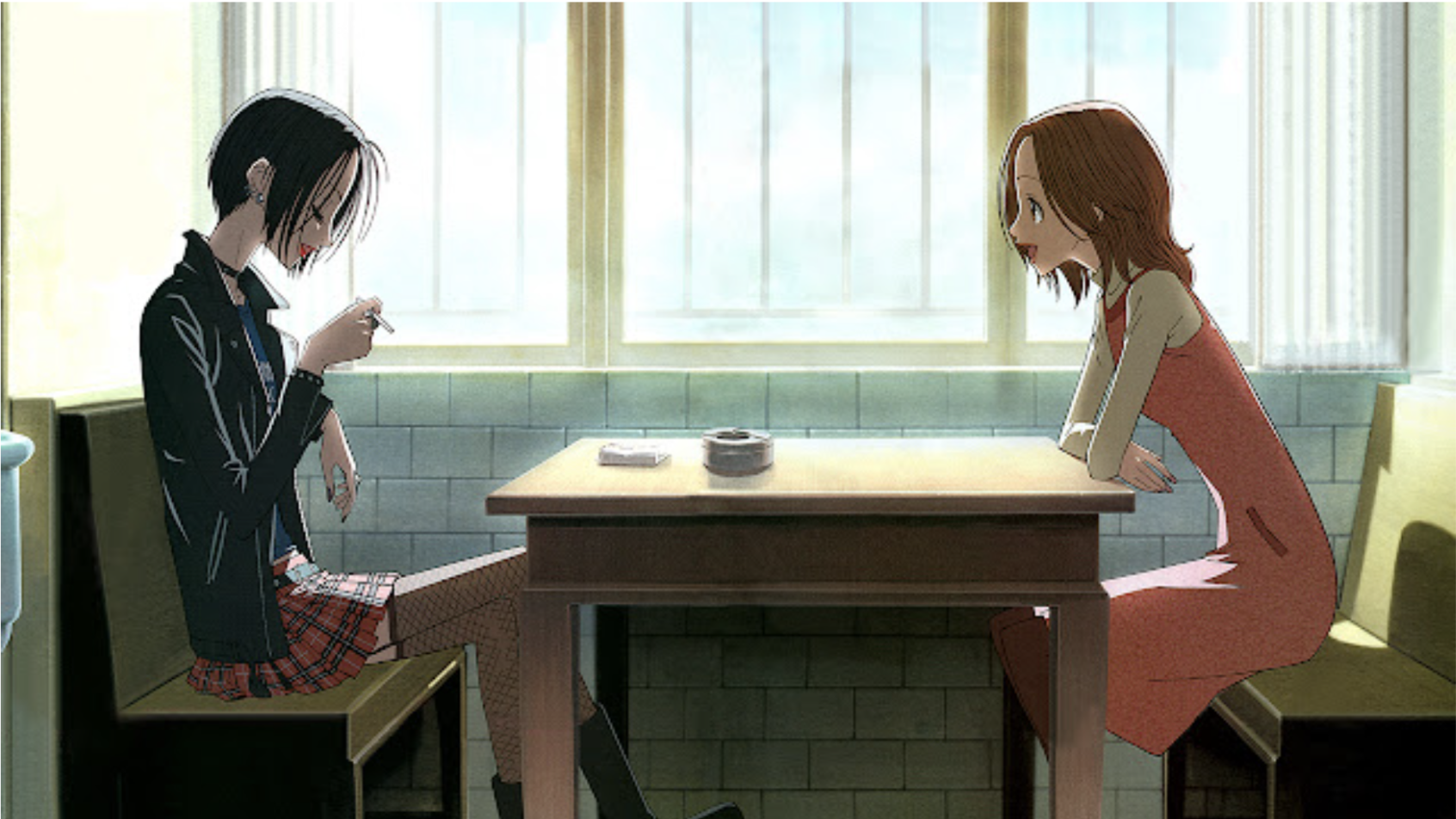
(Nana Osaki (left) and Hachi (right) reflect opposing identities through styling: rebellion and self-protection versus softness and longing. A visual dialogue between punk and vulnerability.)
What’s radical about Nana is not just that it’s punk, it’s that it makes punk feminine. Historically, punk has been loud, violent, and male-dominated. Women in punk were often sexualized or sidelined. Yazawa rewrites that by placing female emotion at the center of the punk aesthetic. Nana Osaki is allowed to be everything: fierce, heartbroken, ambitious, confused. Her punk isn’t nihilism, it’s survival. Westwood’s own philosophy supports this reading. She once said, “The only reason I’m in fashion is to destroy the word ‘conformity.’” Yazawa adopts this mantra, not to burn it all down, but to reconstruct what feminine power can look like. Nana doesn’t just wear punk; she embodies it emotionally. Her refusal to conform to romantic expectations, her rejection of traditional femininity, and her complex relationships with love and ambition all mirror Westwood’s ethos.
Even Hachi, the more traditionally feminine character, subverts expectations. Her emotional journey full of romantic failures and moral ambiguity is just as vital. She’s soft, but not weak. Yazawa allows both characters to exist in tension: hard and soft, punk and pop, chaotic and controlled. This dual protagonism dismantles the idea that there’s only one way to be strong. Punk, reimagined by Yazawa, becomes a space of emotional authorship. Not just rebellion against the outside world, but a refusal to be flattened from within.
Westwood’s fashion has always carried subtext. Her collections loaded with historical irony, sexual provocation and political critique turned garments into arguments. Yazawa’s genius lies in embedding these layers into Nana without making them overt. The visual reference to Westwood becomes a kind of cultural shorthand. Readers don’t need to understand the full history to feel the weight. Take, for example, the repeated use of tartan in Nana’s wardrobe. In British history, tartan is a symbol of rebellion, of Scottish resistance. Westwood turned it into a punk staple. Yazawa, in turn, uses it to underline Nana’s social nonconformity and personal solitude. The clothes whisper what the character can’t say out loud.
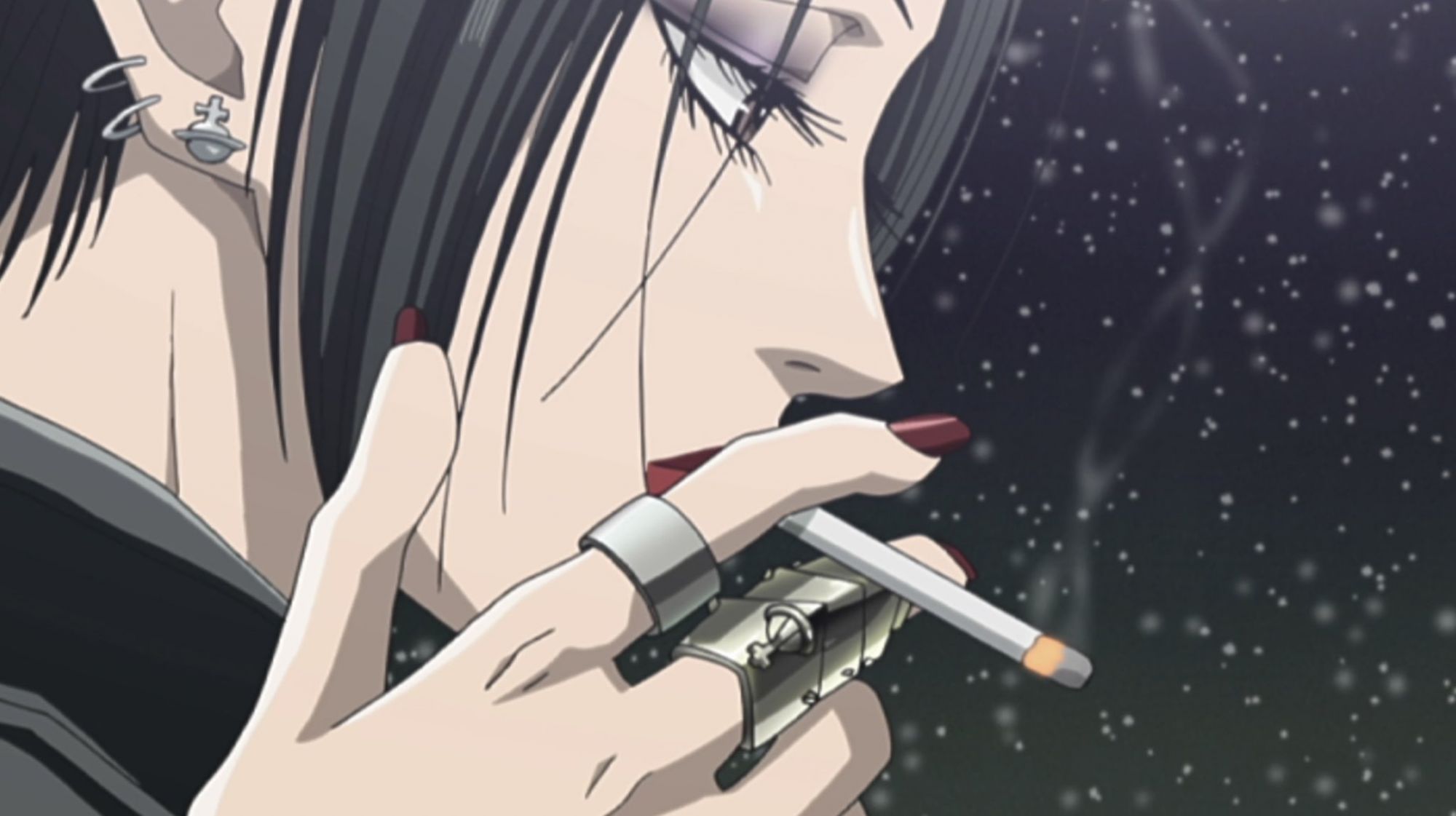
(Not a prop, but a signal. The Westwood armor ring becomes part of Nana’s personal mythology, a silent statement of control, detachment, and self-construction.)
More than fashion, more than punk, Nana is about the myth we build around ourselves. Nana Osaki’s wardrobe is not merely taste, it’s identity curation. Her commitment to a certain look, a certain sound, a certain brand (Westwood), becomes a shield, a projection, and ultimately, a story. Westwood believed in creating characters through clothing. In her collections, there was always an invitation to become someone. Yazawa understands this deeply. She gives Nana Osaki a stage to perform her myth, the punk rock star escaping abandonment, loneliness, and fear. Every time Nana puts on a new outfit, she’s not changing, she’s reinforcing. And that repetition becomes ritual, a mantra: this is who I am.
But mythology is fragile. As the story progresses, cracks appear. Nana’s visual strength begins to contrast her internal unraveling. Her commitment to the myth isolates her, even as it empowers her. This mirrors our own experiences. How often do we cling to aesthetic choices because they tell the world what we want to believe about ourselves? In that way, Nana becomes universal. It’s not just about fashion. It’s about the stories we wear, and what happens when they stop protecting us.
Ai Yazawa’s Nana is more than a stylish manga. It’s a love letter to fashion as narrative, identity, and resistance. For me, this story resonates because it connects all the dots I care about: visual culture, emotional storytelling, subcultural legacy, and brand philosophy. As a Fashion & Management student at AMFI, I’m constantly reflecting on how fashion operates beyond the product. I want to work at the intersection of cultural storytelling and commercial strategy, not just what we sell, but why we sell it. What does it mean? Who does it serve? Nana reminds me that clothes aren’t neutral. They carry history, context, dreams.
In my future role as a buyer or brand strategist, I want to champion collections and campaigns that reflect something deeper, a point of view, a philosophy, a lived experience. The way Yazawa uses Westwood not just as inspiration but as structure has taught me the power of intentional visual language. Just like a buyer curates an assortment, Yazawa curates emotion through design. This research affirms my belief that fashion can be intellectually rich, emotionally sincere, and culturally relevant all at once. That’s the kind of work I want to be part of. One that doesn’t just follow trends, but shapes narratives.